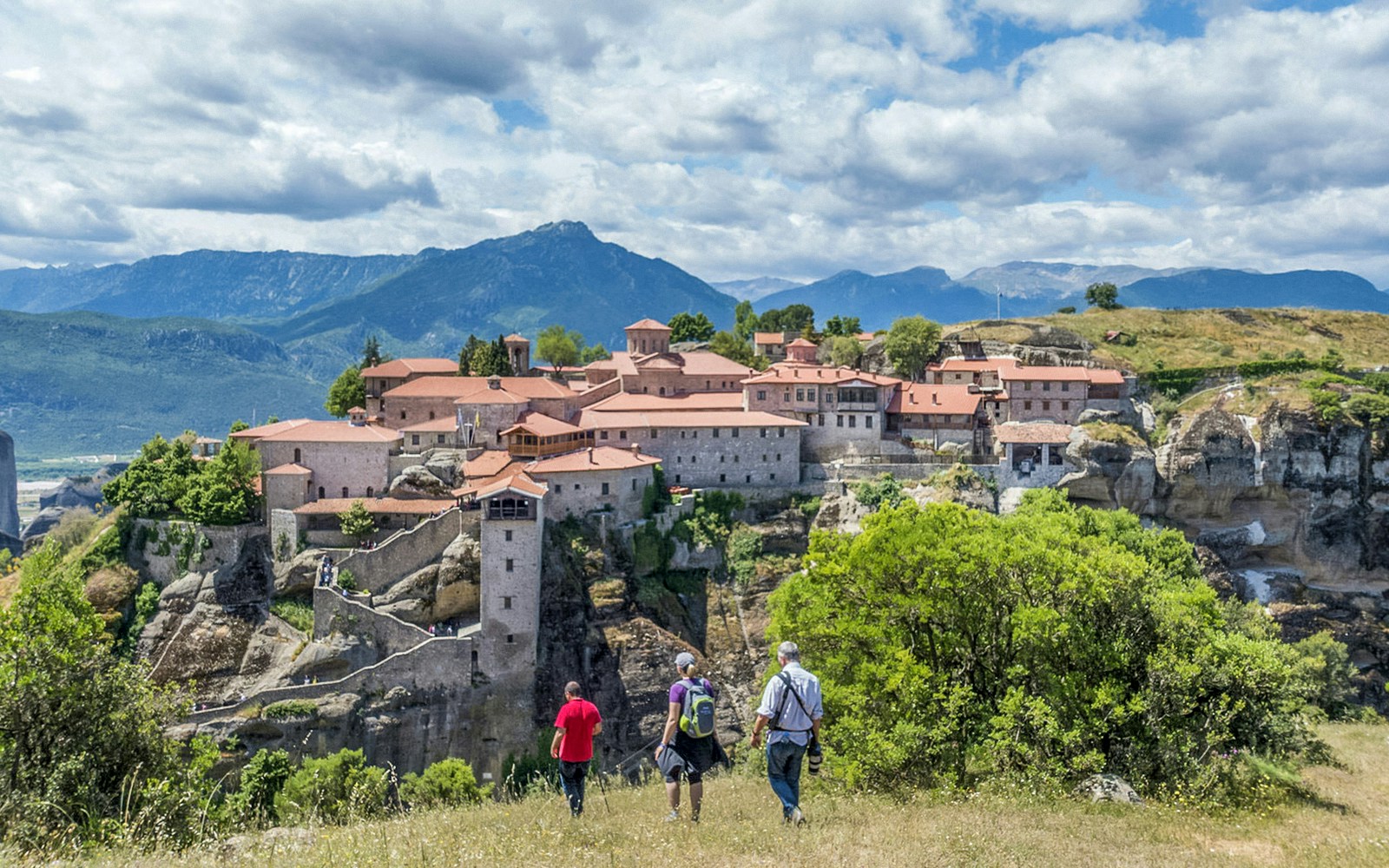
Founded in the 14th century by St. Athanasios, the Great Meteoron Monastery is the largest and oldest of Meteora’s six active monasteries. It once served as a refuge for hermit monks and a spiritual center during the Ottoman era, safeguarding manuscripts, relics, and treasures. Inside, you’ll find frescoes from the 1500s that vividly portray both paradise and martyrdom, considered some of the finest post-Byzantine art in Greece. Even today, its vast courtyards and preserved kitchen tell the story of a self-sufficient community high above the Thessalian plain.
How to access
Entry to the Great Meteoron Monastery is already included with all Meteora tours, subject to its opening schedule. There’s no need to purchase a separate pass, so you can simply enjoy this landmark as part of your journey through Meteora’s rock-top sanctuaries.
What makes the Great Meteoron Monastery a must-see
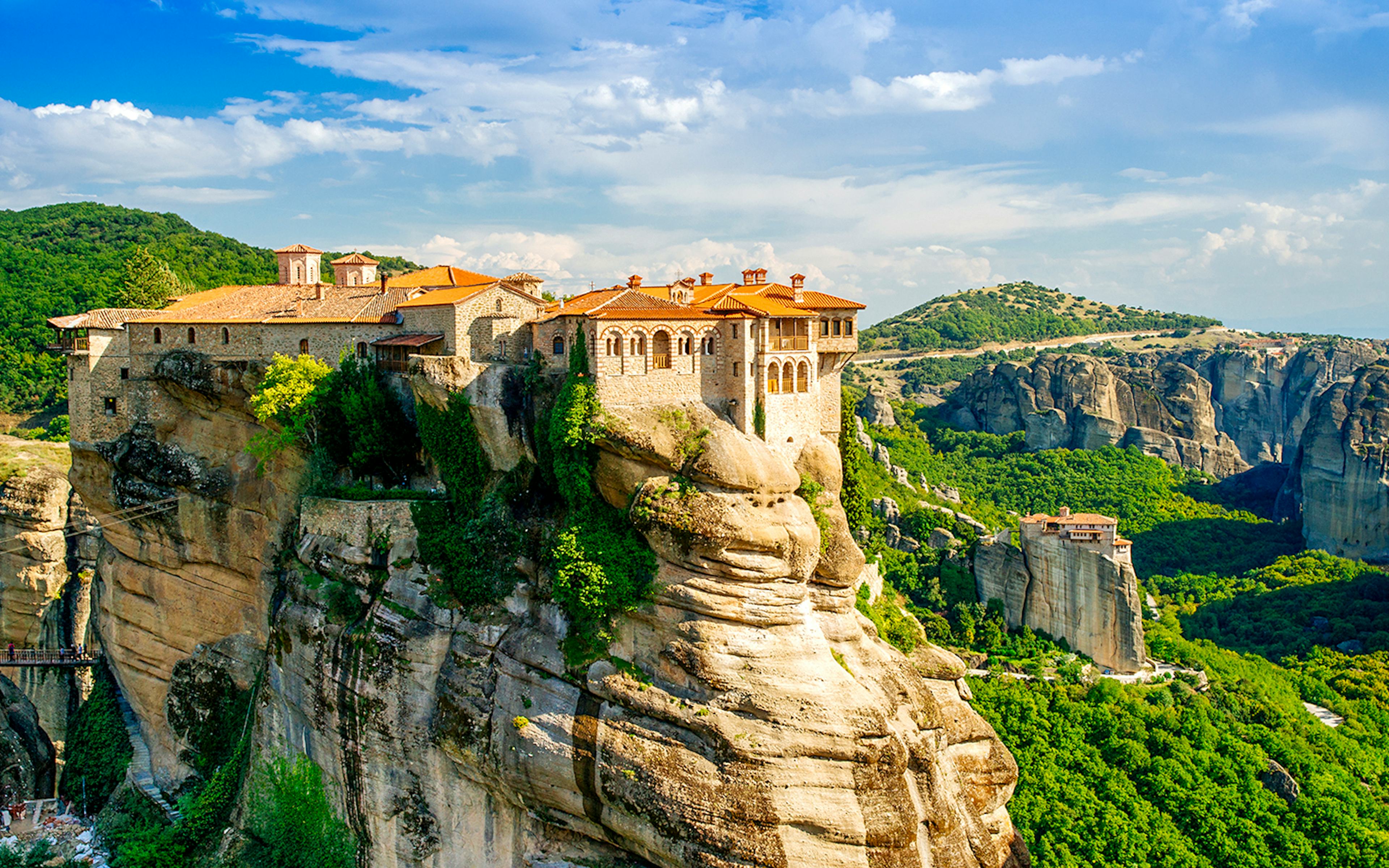
Panoramic terraces
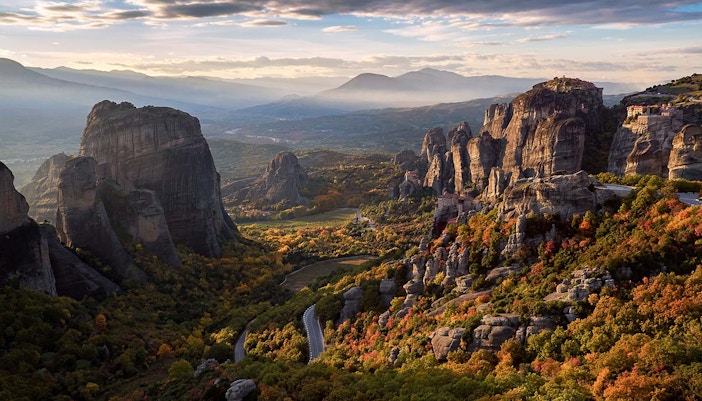
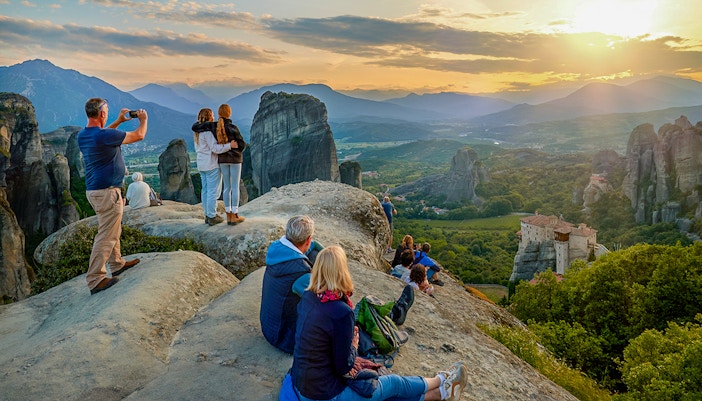
From the monastery’s elevated courtyards, you get some of the widest, unbroken views across the Thessalian plain, with Mount Olympus faintly visible on clear days. Stay until sunset and watch the cliffs blaze orange while the valley below sinks into shadow; it feels like a scene out of a film.
Burial site of founders
The tombs of St. Athanasios the Meteorite and his successor St. Ioasaph lie within the complex, turning the site into a place of pilgrimage as well as history. The fact that the two men who established Meteora’s monastic life are still interred here gives the site immense spiritual gravity.
Rare preserved kitchen
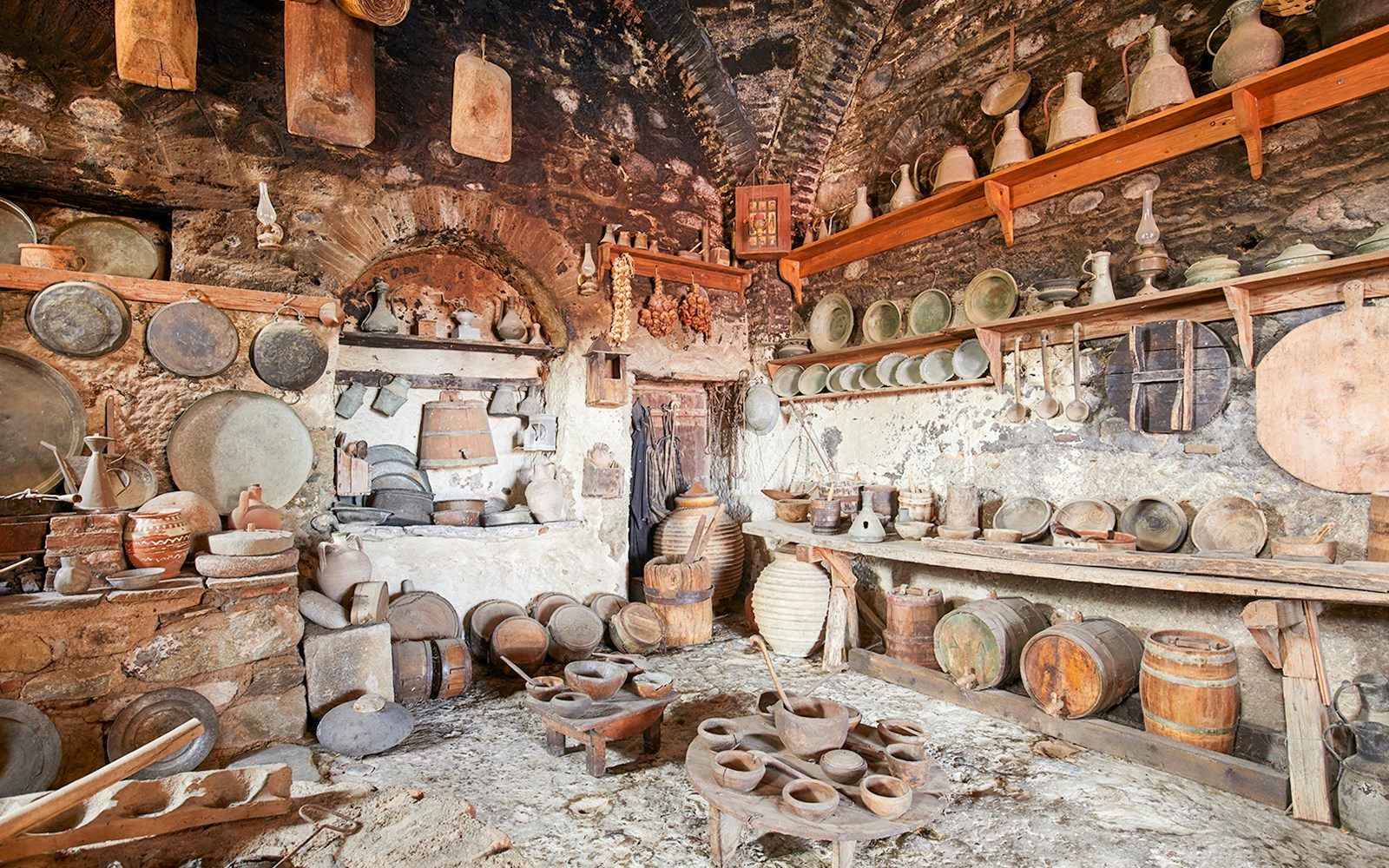
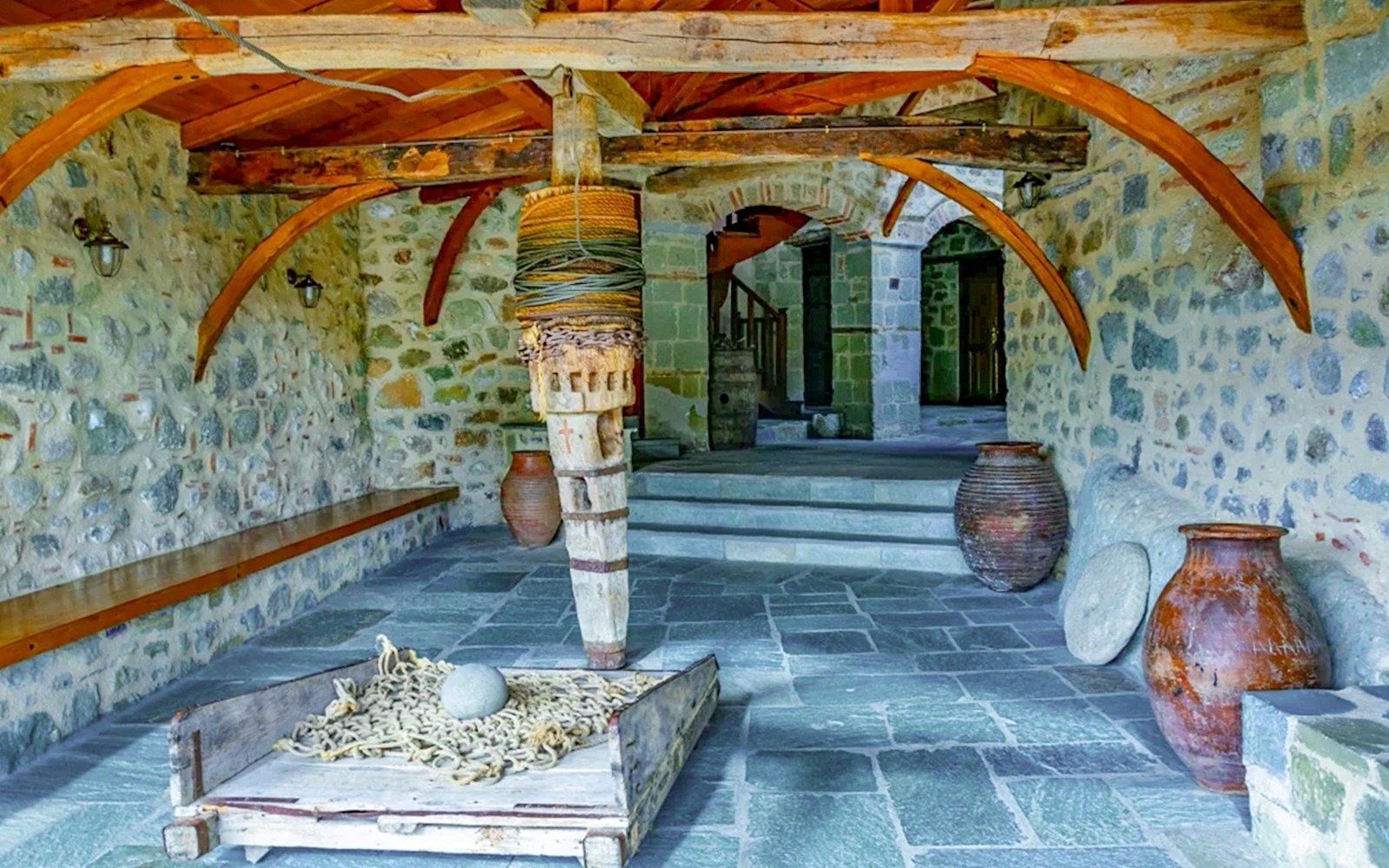
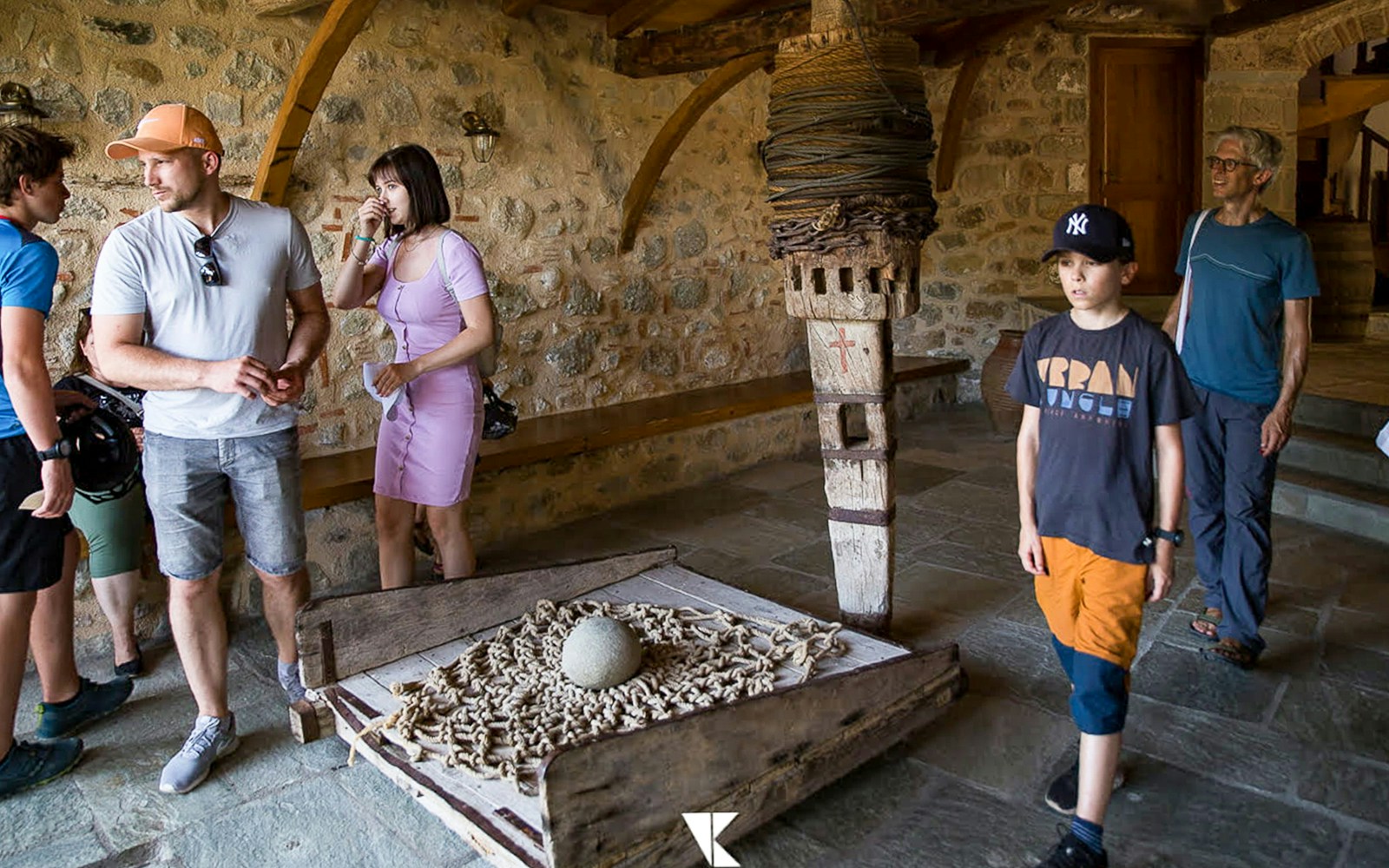
The monastery contains a remarkably well-preserved medieval kitchen, complete with stone hearths, smoke-blackened chimneys, and centuries-old cooking utensils. This glimpse of monastic daily life is rare, since most monasteries lost such features during later renovations.
A look inside the Great Meteoron Monastery
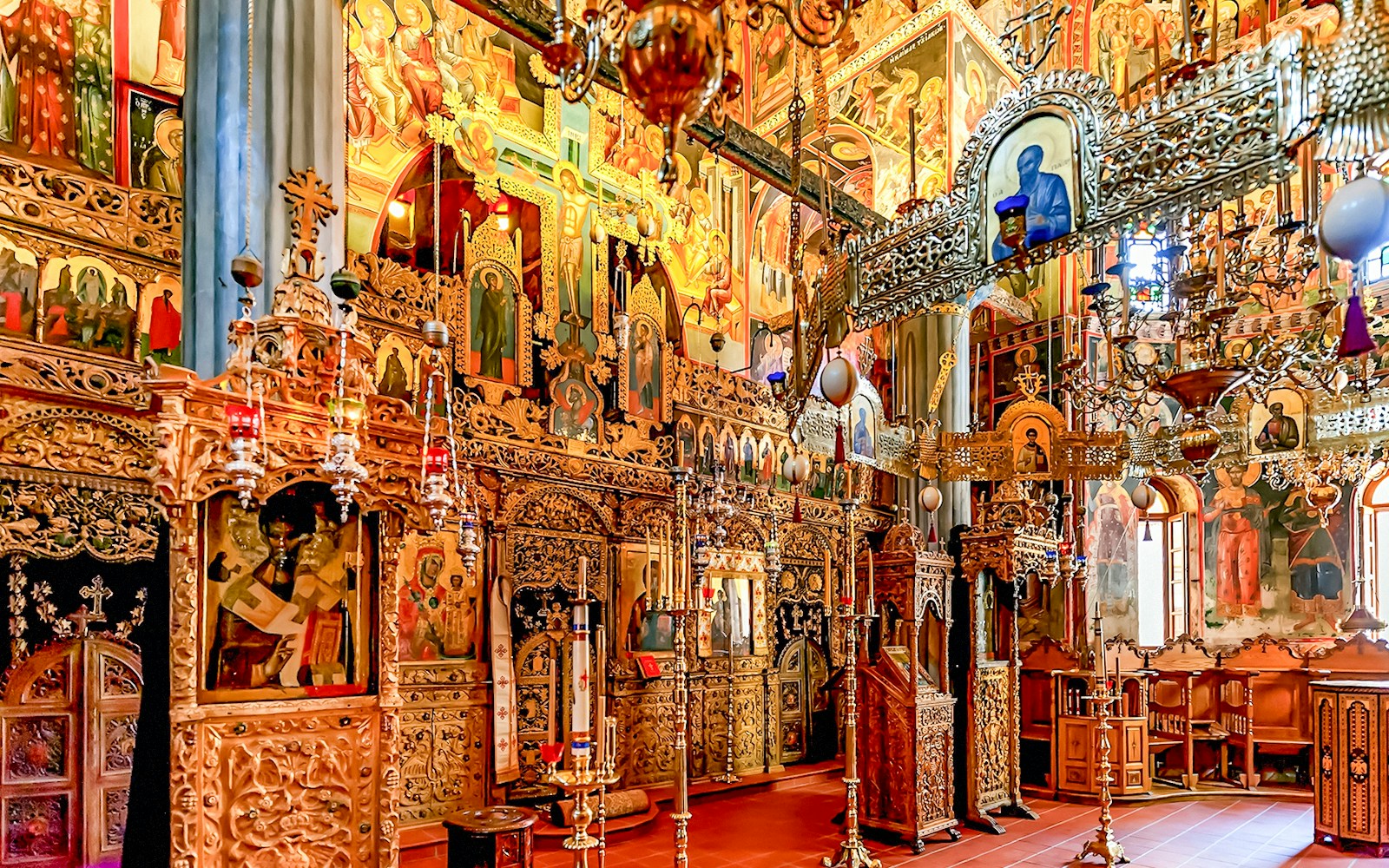
Katholikon of the Transfiguration
The main church, decorated with 16th-century frescoes showing vivid scenes of martyrdom, paradise, and judgment.
Know before you go
Opening hours & duration of visit
- Great Meteoron is closed on Tuesdays, so plan your visit around this weekly closure if you want to include it in your itinerary.
- The monastery opens daily from 9am to 3pm. During the winter months (November to January), the schedule may vary a little due to shorter daylight hours.
- The monastery has a quiet, spiritual atmosphere, but as the largest and most famous, it often draws tour groups, especially late morning; arrive by 10am to enjoy a calmer experience.
- With its size and variety of exhibits, including a historic kitchen, museum, and chapels, the Great Meteoron typically takes at least one hour to explore, longer than most other Meteora monasteries.
Entry & access
- To help with the upkeep of the site, the monastery requests a small cash contribution of €3 to €5 per person at the entrance, similar to the other Meteora monasteries.
- Be prepared to climb around 300 stone steps carved into the rock to enter the monastery, a moderately demanding ascent that requires sturdy shoes and a good fitness level.
Rules
- Photography is allowed in outdoor areas, and the courtyards are especially scenic, though pictures are forbidden inside the churches.
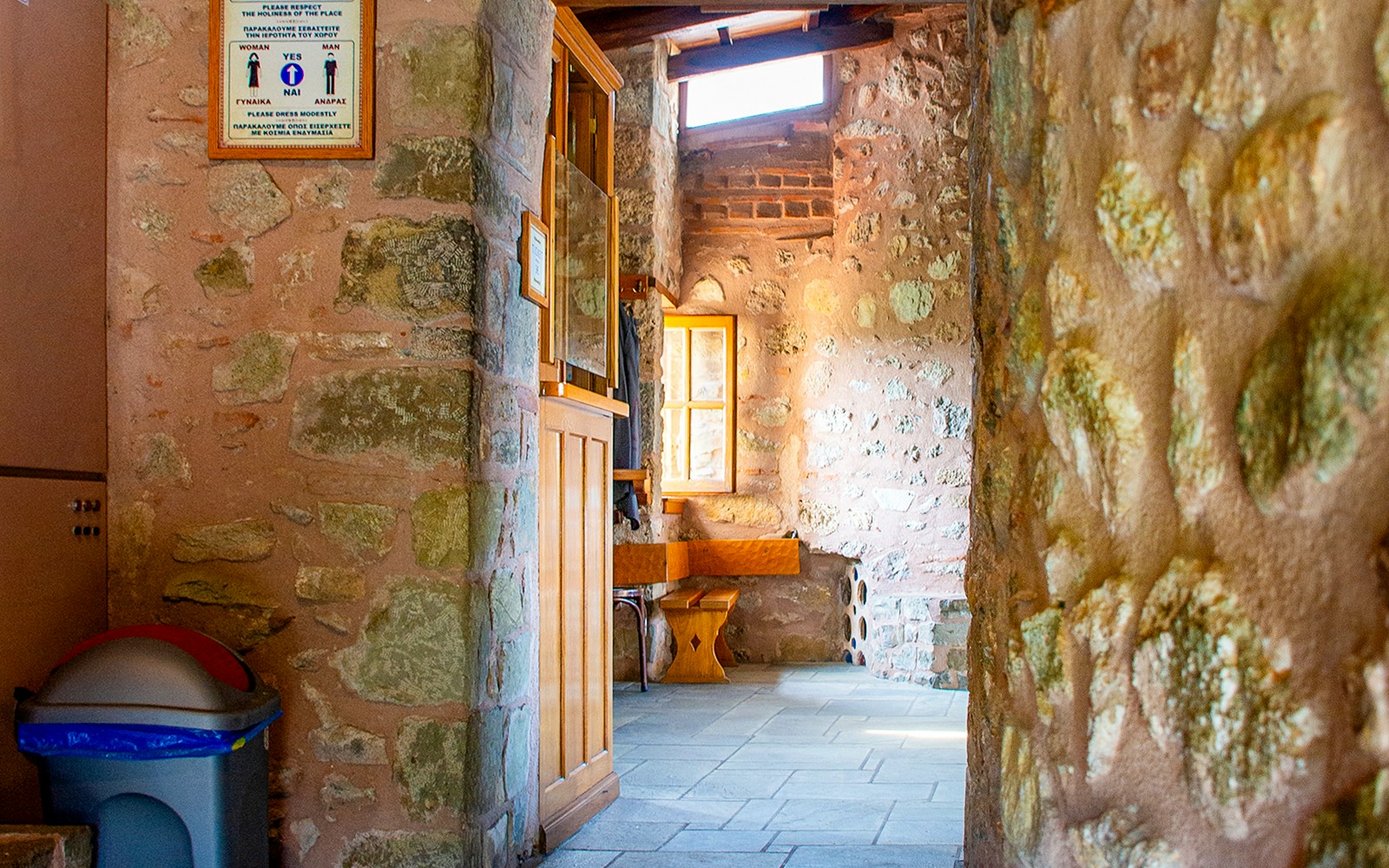
- Dress codes are strictly enforced. Men must wear long trousers, and women must wear long skirts and cover their shoulders. Wrap skirts and shawls are provided at the entrance if needed.
Nearby towns & trails
- The monastery pairs naturally with a visit to Varlaam, which sits directly opposite on another rock; the two are often visited together on full-day tours from Athens.
- The nearest towns, Kalabaka and Kastraki, are perfect for a post-visit meal, with plenty of tavernas serving local specialties such as baked lamb and fresh mountain greens.
- Scenic hiking trails link Great Meteoron with Varlaam and Rousanou. While the stone paths are steep, they reward you with cliffside photo spots rarely visible from the road.
Frequently asked questions about Great Meteoron Monastery
Yes, entry to the Great Meteoron Monastery is included in all Meteora day tours. Access is subject to availability, as opening hours or capacity may vary depending on the season and visitor numbers.
Plan to spend 1 to 2 hours exploring the monastery and its surroundings. With its chapels, museum, and historic kitchen, it typically takes longer to see than other Meteora monasteries.
The monastery is busiest late morning when tour groups arrive. For a calmer experience, aim to visit early in the morning (before 10am) or later in the afternoon.
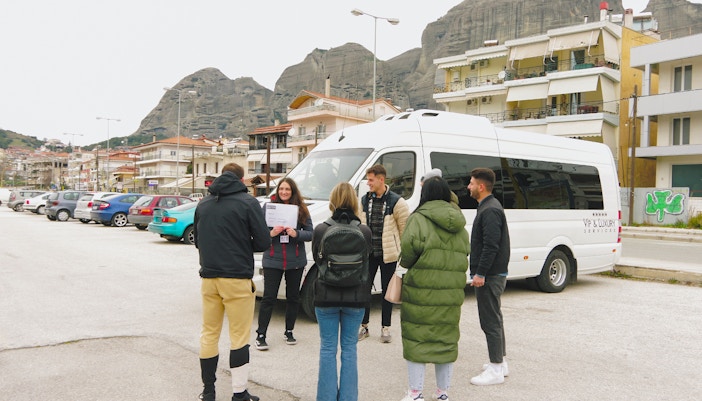
Yes, all Meteora tours from Athens or Thessaloniki include an English or Spanish-speaking guide along with smart audio guides in multiple languages, inviting you to dive deeper into the monastery’s history, architecture, and religious traditions that you might otherwise miss.
Photography is allowed in outdoor areas and courtyards, which are especially scenic. However, photos are not permitted inside the churches or chapels to preserve their sacred atmosphere.
Unfortunately, the monastery is not easily accessible to visitors with mobility challenges. Reaching it requires climbing around 300 stone steps and navigating uneven paths.
A modest dress code is strictly enforced. Men must wear long trousers, while women must wear long skirts and cover their shoulders; wrap skirts and shawls are available at the entrance if needed.
Yes. Meteora is home to six active monasteries, and each offers its own unique atmosphere and views. The Great Meteoron pairs especially well with a visit to Varlaam Monastery, located directly opposite.