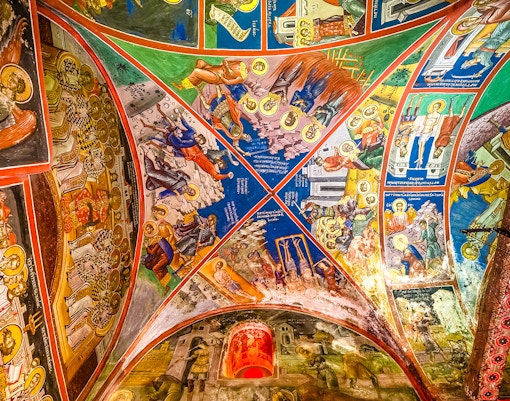
At the heart of the monastery stands the main church, dedicated to St. Stephen. Its post-Byzantine design features a vaulted ceiling, central dome, and an interior adorned with vivid frescoes and gilded icons depicting scenes from the New Testament and the life of St. Stephen.
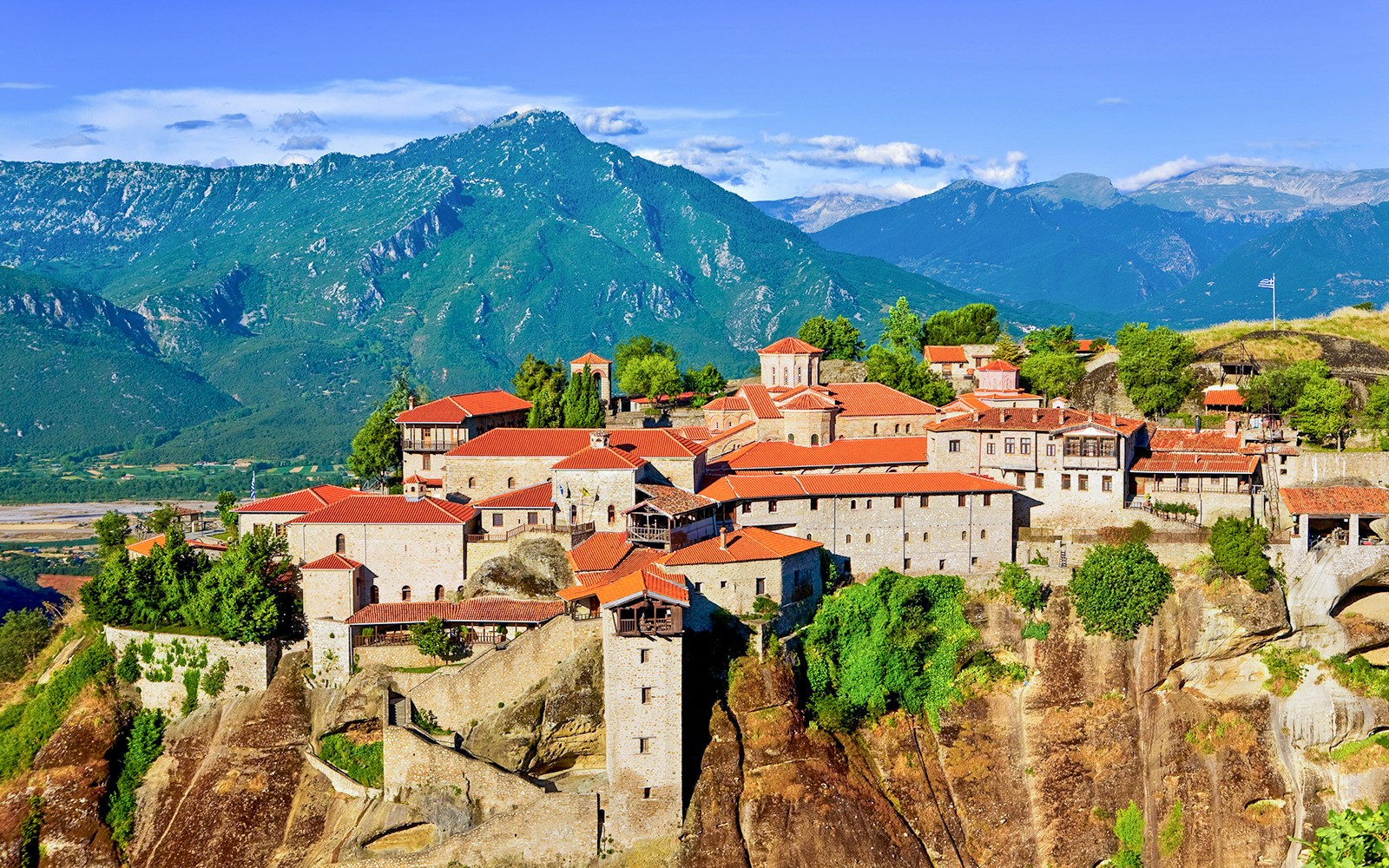
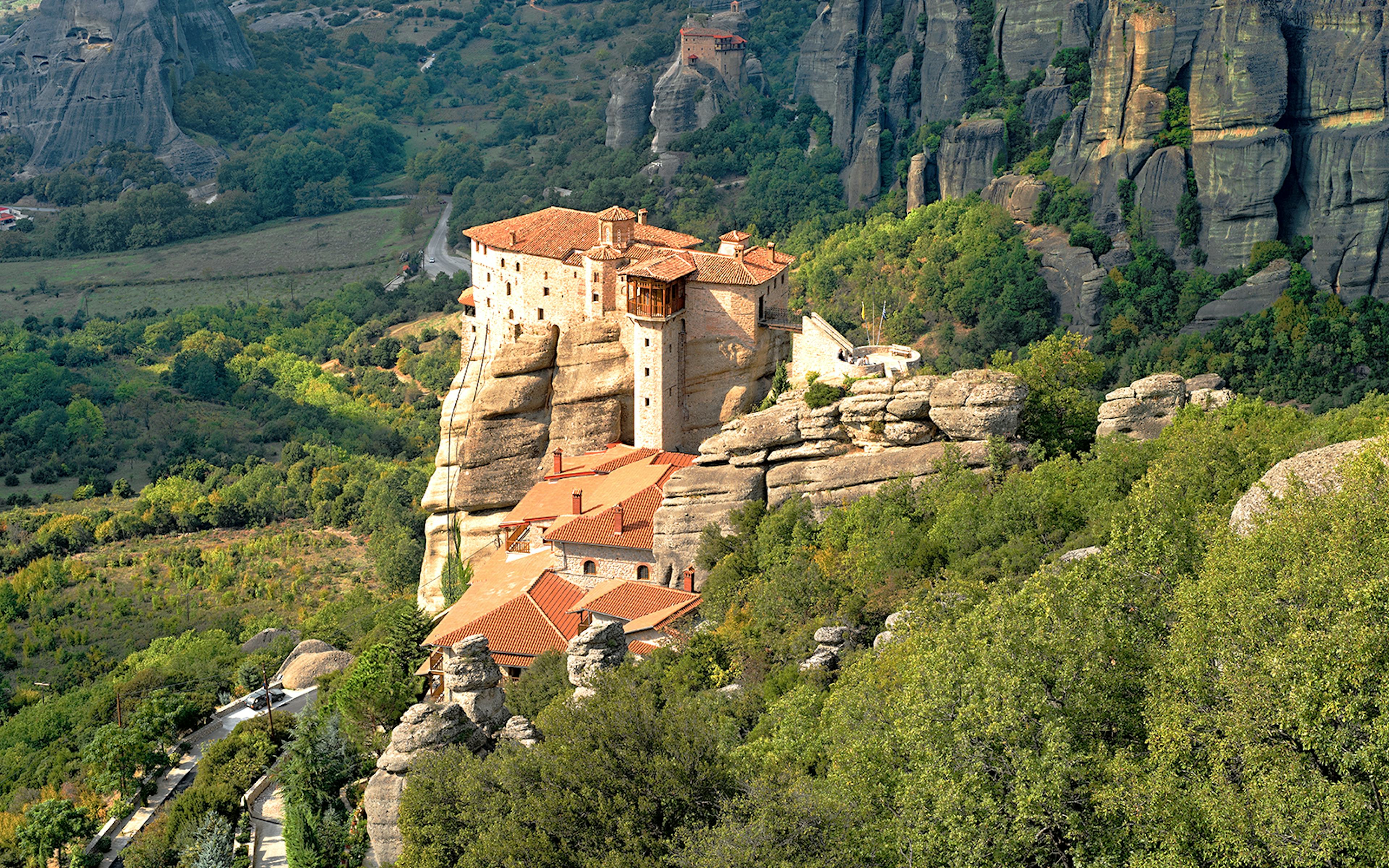
Unlike most monasteries that require hundreds of steps to reach, St. Stephen’s is accessed by a small bridge, making it Meteora’s most welcoming stop for visitors of all abilities. Established in the 14th century, it was nearly abandoned until nuns revived it in the 20th century, transforming it into a vibrant convent. Inside, it preserves the revered relics of St. Charalambos, believed to protect against plague and illness. Its open terraces offer some of the widest views over the Thessalian plain, adding serenity to its spiritual legacy.
How to access
Access to St. Stephen’s Monastery is part of every Meteora day tour, provided it is open on your visiting day. Unlike most monasteries, you can enter via a small bridge rather than hundreds of steps, making it the most welcoming stop in Meteora.
Why you should add St. Stephen’s Monastery to your Meteora itinerary
1/3
Easiest to access
St. Stephen’s welcomes you across a small footbridge instead of hundreds of steep steps. It’s the easiest monastery to reach, opening its doors to visitors of all ages, even if you’d find the other climbs too demanding.
Reborn as a convent
Nearly abandoned in the mid-20th century after wartime damage, it was revitalized by an order of nuns who reestablished it as a lively convent. Today, it offers a genuine glimpse into the daily lives of Orthodox nuns who preserve its traditions, beauty, and spiritual atmosphere.
Home to holy relics
The monastery holds the skull of St. Charalambos, a relic that Orthodox Christians believe protects against plagues and illness. Pilgrims often visit specifically to pay respects to the saint, giving the monastery an additional layer of spiritual significance.
Inside St. Stephen's Monastery
The Katholikon
The Chapel of St. Charalambos
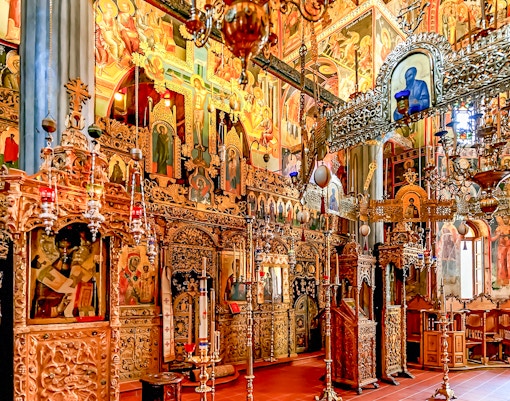
One of the most notable areas is the Chapel of St. Charalambos, a small yet sacred space that houses a revered relic believed to hold healing powers. Beautifully preserved, its frescoed walls glow softly in the light of flickering candles.
The Ecclesiastical Museum
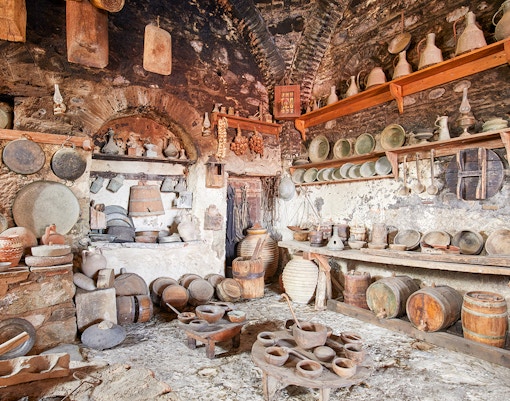
For history lovers, the monastery’s small but well-curated museum is a highlight, displaying manuscripts, hand-painted icons, ornate vestments, and silver and gold ecclesiastical treasures. Each piece reflects centuries of faith, artistry, and devotion.
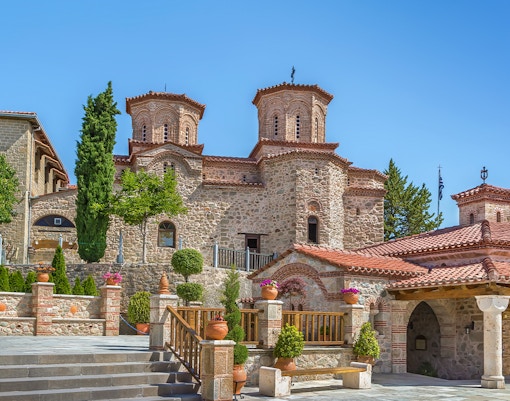
Inner courtyards
Step outside the stone buildings, and you’ll find yourself in the monastery’s beautiful courtyards and gardens. These spaces are lovingly tended by the resident nuns, bursting with colorful flowers, fragrant herbs, and shaded sitting areas that invite peaceful pauses.
Know before you go
Opening hours & duration of visit
- St. Stephen’s Monastery is closed on Mondays, so be sure to schedule around this closure if you’d like to visit.
- The site is generally open from 9am to 1:30pm and again from 3:30pm to 5:30pm, with slightly shorter hours between November and February, when daylight hours are limited.
- Because of its size and ease of access, you can explore St. Stephen’s in about 30 to 40 minutes, though many visitors spend longer strolling through its spacious courtyards.
Entry & access
- You’ll need to make a €3 to €5 cash offering at the gate, which helps support the upkeep of the convent, just like at the other Meteora monasteries.
- St. Stephen’s is the most accessible of all the monasteries: instead of climbing steep staircases, you simply cross a paved footbridge to enter, making it suitable for travelers of all ages and abilities, including those with limited mobility.
Rules
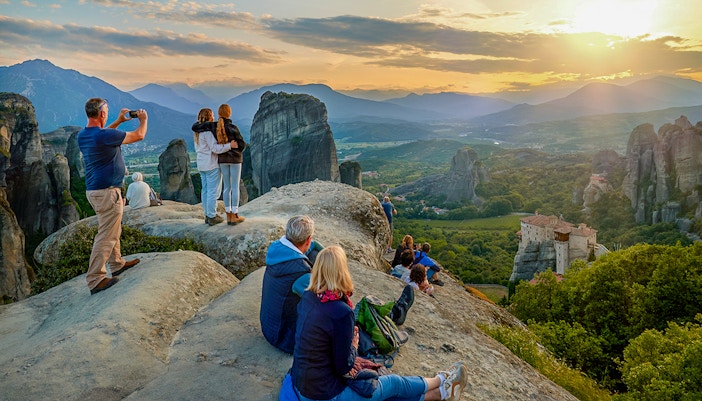
- Photography is permitted in the courtyards and outdoor spaces, which look out over sweeping views of the Thessalian plain and the distant Pindus mountains. However, you cannot click pictures inside the monastery.
- Dress codes are enforced: men must wear trousers and women long skirts with shoulders covered. Wrap skirts and shawls are available at the entrance, if needed.
Nearby towns & trails
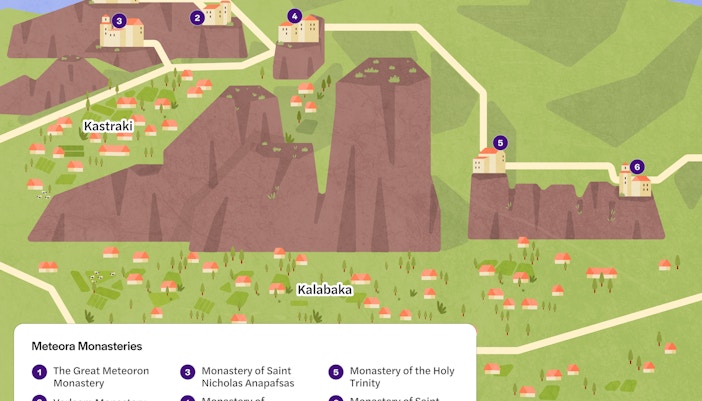
- St. Stephen’s is often paired with Holy Trinity Monastery, which stands on the neighboring cliff, though reaching Holy Trinity requires a more demanding climb.
- The closest town is Kalabaka, just a short drive away, with plenty of tavernas where you can enjoy a post-visit meal or coffee.
- Because of its easy access and spacious layout, St. Stephen’s is a popular final stop on many full-day Meteora tours, giving you time to relax and take in the panoramic views without a strenuous climb.
Frequently asked questions about St. Stephen's Monastery
Yes. Access to St. Stephen's Monastery is included with all Meteora day tours, though access depends on opening hours and religious services taking place during your visit.
Most visitors spend 30 to 45 minutes exploring the church, chapels, and museum, and taking in the sweeping views from the terraces.
The monastery is busiest midday with tour groups, so aim to arrive early in the morning (by 10am to 11pm) or later in the afternoon (after 2pm) for a calmer atmosphere.
Yes, you may take photos in the inner courtyards and gardens, but photography is strictly prohibited inside the church, and clicking pictures of monks or nuns is not allowed.
Yes. You’ll need to dress modestly, with shoulders and knees covered; wrap skirts and shawls are usually provided at the entrance if needed.
Yes. You can join full-day guided tours from Athens or Thessaloniki, which are highly recommended as they bring the monastery’s history, art, and spiritual significance to life within the wider story of Meteora.
You can combine your visit with other Meteora monasteries, Great Meteoron, Varlaam, Rousanou,** and St. Nicholas Anapausas, and enjoy the dramatic cliffs and scenic trails that connect them.